
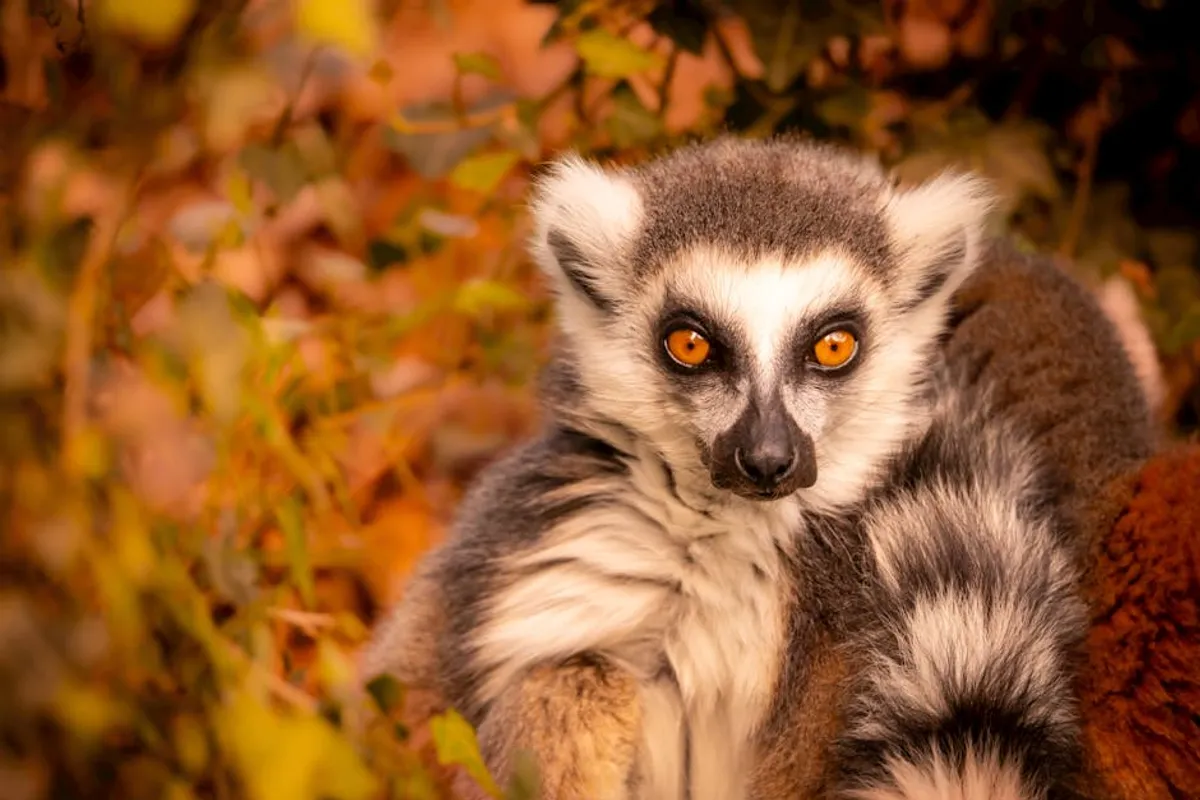
Madagascar’s lemurs represent a distinct evolutionary branch of primates, found nowhere else on Earth. Their remarkable diversity, ranging from the tiny Madame Berthe's mouse lemur to the striking Indri, offers a unique window into adaptive radiation and the intricate balance of island ecosystems. For curious readers, understanding the core facts about these animals is not just about accumulating knowledge; it's about appreciating a critical component of global biodiversity and the urgent need for conservation. These creatures face unprecedented threats, making detailed knowledge about their biology, behavior, and ecological roles more vital than ever. This curated selection of facts aims to provide a robust foundation for anyone seeking to delve deeper into the world of these iconic Malagasy inhabitants. Understanding the core facts about these animals is not just about accumulating knowledge; it's about appreciating a critical component of global biodiversity and the urgent need for conservation, especially when considering Madagascar’s unique wildlife.
Key Aspects of Lemur Biology and Conservation
When exploring the world of lemurs, certain facts stand out for their significance in understanding these unique primates. Focus on details that illuminate their evolutionary history, ecological niche, and the specific challenges they face. Key aspects include their strict endemism to Madagascar, their diverse adaptations to various habitats, the unique social structures many species exhibit, and their often precarious conservation status. Understanding these elements provides a comprehensive picture, moving beyond superficial observations to grasp the deeper biological and environmental context of lemur existence.
1. Lemurs are Primates Endemic to Madagascar
This foundational fact establishes the unique geographical isolation and evolutionary lineage of lemurs, distinguishing them from other primates globally. Their presence solely on Madagascar underscores the island's unparalleled biodiversity and its role as a natural laboratory for evolution. Their ancestors are believed to have rafted to the island from Africa millions of years ago, evolving in isolation into the diverse forms seen today.
Best For: Foundational understanding of lemur biology and geographical distribution.
Pros: Clearly defines their exclusive habitat; emphasizes their uniqueness within the primate order; sets the stage for understanding their conservation challenges.
Cons: Does not explain *why* they are only found there (requires evolutionary history context); can lead to an oversimplified view of Madagascar's biodiversity if not paired with other endemic species.
Verdict: Essential for any initial comprehension of lemurs, this fact highlights their singular place in the natural world and the critical importance of Madagascar for their survival.
2. Over 100 Species and Subspecies Exist
The sheer number of recognized lemur species and subspecies, exceeding 100, illustrates an extraordinary level of adaptive radiation within a single lineage. This diversity encompasses a vast array of sizes, behaviors, diets, and appearances, from the cat-sized Ring-tailed Lemur to the tiny mouse lemurs, challenging any monolithic view of "the lemur." New species continue to be identified, reflecting ongoing scientific discovery.
Best For: Appreciating the vast biological diversity within the lemur family.
Pros: Underscores the success of lemur evolution in Madagascar; highlights the varied ecological roles they play; demonstrates the depth of biological research still occurring.
Cons: The large number can be overwhelming without further categorization; identifying individual species often requires specialized knowledge, making general understanding difficult.
Verdict: This fact is crucial for moving beyond a generic concept of lemurs, emphasizing the rich tapestry of life forms that have evolved on Madagascar.
3. They Belong to the Strepsirrhine Suborder of Primates
Lemurs are classified within the Strepsirrhini suborder, which also includes lorises and galagos. This classification distinguishes them from Haplorrhini (monkeys, apes, and tarsiers) by several anatomical features, such as a "wet nose" (rhinarium), a toothcomb used for grooming, and a smaller brain-to-body size ratio. Understanding this phylogenetic placement clarifies their evolutionary relationship to other primates.
Best For: Understanding lemurs' evolutionary position within the primate order.
Pros: Provides a scientific framework for comparing lemurs to other primates; explains specific anatomical traits; clarifies their ancient lineage.
Cons: Requires some familiarity with primate taxonomy; details of specific anatomical differences may not be immediately intuitive for all readers.
Verdict: This fact is vital for a deeper, scientific understanding of lemurs, positioning them correctly within the broader evolutionary tree of primates.
4. Many Species Exhibit Female Dominance
Unlike most other primate societies where males typically hold higher social status, many lemur species, including Ring-tailed Lemurs and sifakas, display female dominance. Females often have priority access to food and mates, and they lead group movements. The exact evolutionary reasons for this unusual social structure are still debated among primatologists but may relate to the unique ecological pressures of Madagascar's environment.
Best For: Exploring unique social structures and behavioral ecology.
Pros: Highlights a rare and intriguing aspect of primate behavior; challenges common assumptions about social hierarchies; invites deeper inquiry into evolutionary drivers of behavior.
Cons: Not universal across all lemur species, so generalization should be avoided; the underlying causes are complex and not fully understood, inviting speculative interpretation.
Verdict: This fact offers a fascinating insight into the behavioral distinctiveness of lemurs, making them a key subject for studies in social evolution.
5. Their Diets Vary Widely, From Frugivory to Insectivory
Lemurs occupy diverse ecological niches, reflected in their varied diets. While many are primarily frugivorous (fruit-eaters) or folivorous (leaf-eaters), some species are specialized insectivores (e.g., Aye-aye), and others consume nectar, flowers, or even small vertebrates. This dietary flexibility is a testament to their adaptability and plays a crucial role in seed dispersal and forest health.
Best For: Understanding lemur ecological roles and adaptability.
Pros: Demonstrates their integration into the Malagasy ecosystem; explains their varied impact on plant life; showcases their evolutionary plasticity.
Cons: Generalizing dietary habits can obscure species-specific nuances; detailed understanding requires knowledge of specific plant and insect species consumed.
Verdict: This fact underscores the ecological importance of lemurs as seed dispersers and pollinators, highlighting their critical role in maintaining forest biodiversity.
6. The Aye-Aye Has a Unique Elongated Middle Finger
The Aye-aye (Daubentonia madagascariensis) possesses one of the most specialized foraging adaptations in the animal kingdom: an elongated, slender middle finger. This finger is used for percussive foraging, tapping on wood to locate insect larvae, then extracting them from crevices. This unique tool-like appendage, combined with large ears, makes the Aye-aye an ecological equivalent to a woodpecker.
Best For: Illustrating extreme evolutionary adaptations for niche feeding.
Pros: Provides a concrete example of specialized morphology; highlights convergent evolution with other species; demonstrates the diversity of lemur adaptations.
Cons: Focuses on a single, highly specialized species, which may not represent broader lemur traits; its nocturnal and elusive nature makes direct observation challenging.
Verdict: The Aye-aye's finger is a prime example of evolutionary ingenuity, showcasing how lemurs have filled distinct ecological roles on Madagascar.
7. Many Species Communicate Through Scent Marking
Scent marking is a crucial form of communication for many lemur species, particularly among those that are nocturnal or live in dense forest. Glands on wrists, chests, and anogenital regions produce distinct odors that convey information about an individual's identity, reproductive status, and territorial claims. Ring-tailed Lemurs are famous for their "stink fights," where males rub their tails with scent and wave them at rivals.
Best For: Understanding non-visual communication and social dynamics.
Pros: Reveals a complex layer of lemur social interaction; explains how they navigate and define territories; offers insights into their sensory world.
Cons: Scent communication is difficult for human observers to directly perceive or interpret; specific chemical signals are complex and require scientific analysis to fully understand.
Verdict: This fact highlights the sophisticated, often hidden, communication systems that govern lemur social and territorial behaviors, crucial for their survival in dense habitats.
8. They Face Severe Conservation Threats
Lemurs are among the most endangered mammal groups globally, with over 90% of all species classified as Vulnerable, Endangered, or Critically Endangered by the IUCN. Primary threats include habitat destruction through deforestation for agriculture, charcoal production, and logging, as well as hunting for bushmeat and the illegal pet trade. These pressures have intensified, pushing many species to the brink of extinction.
Best For: Grasping the urgency of lemur conservation efforts.
Pros: Clearly outlines the critical challenges to lemur survival; provides context for conservation initiatives; emphasizes human impact on biodiversity.
Cons: Can be disheartening without corresponding information on conservation successes; the scale of the problem can seem overwhelming, potentially leading to desensitization.
Verdict: This fact is essential for anyone seeking to understand the current status of lemurs and the paramount importance of global and local conservation actions.
9. Some Species Exhibit Torpor or Hibernation
Unlike most primates, some lemur species, particularly the fat-tailed dwarf lemur, are known to enter states of torpor or even prolonged hibernation during periods of food scarcity or drought. They store fat in their tails during abundant seasons and then retreat into tree hollows, significantly lowering their metabolic rate and body temperature to conserve energy. This adaptation is rare among primates and demonstrates extreme environmental resilience.
Best For: Showcasing unique physiological adaptations to environmental challenges.
Pros: Highlights an unusual primate behavior; demonstrates physiological flexibility; provides a compelling example of adaptation to seasonal resource fluctuations.
Cons: Only applies to a limited number of species, not a universal lemur trait; the physiological mechanisms are complex and require detailed biological explanation.
Verdict: This fact reveals a remarkable evolutionary strategy, positioning certain lemurs as prime subjects for studying primate thermoregulation and energy conservation.
10. Their Cultural Significance in Madagascar is Diverse
In Malagasy culture, lemurs hold varied and complex roles, ranging from sacred ancestors (fady) to symbols of evil or bad omens. Some communities consider specific lemur species taboo to harm, viewing them as reincarnated relatives, while others hunt them. These cultural beliefs significantly influence local conservation efforts and the perception of lemurs among different ethnic groups across the island.
Best For: Understanding the socio-cultural context of lemur conservation.
Pros: Provides a crucial human dimension to lemur existence; explains varying local attitudes towards lemurs; highlights the intersection of culture and conservation.
Cons: Cultural beliefs are diverse and can be difficult to generalize; misinterpretation of local customs can hinder effective conservation strategies.
Verdict: This fact is vital for appreciating the complex interplay between human societies and wildlife, demonstrating that conservation is not solely a biological challenge.
11. Many are Nocturnal, While Others are Diurnal or Cathemeral
Lemurs exhibit a range of activity patterns. Many of the smaller species, like mouse lemurs and the Aye-aye, are strictly nocturnal, adapted to foraging under the cover of darkness. Larger species, such as Ring-tailed Lemurs and sifakas, are diurnal (active during the day). Uniquely, some lemurs are cathemeral, meaning they are active intermittently throughout both day and night, adjusting their schedules based on factors like temperature, food availability, and predator presence.
Best For: Understanding varied behavioral adaptations to light and predation.
Pros: Illustrates behavioral flexibility across species; explains how different lemurs utilize their environment at various times; highlights diversity in activity patterns within a single primate group.
Cons: Observing nocturnal species requires specialized equipment and methods; generalizing activity patterns can overlook species-specific or environmental variability.
Verdict: This fact demonstrates the broad spectrum of behavioral strategies employed by lemurs to thrive in their diverse habitats, from avoiding predators to accessing resources.
12. They are Crucial for Forest Regeneration and Health
As primary consumers, lemurs play a vital role in the health and regeneration of Madagascar's forests. Many species are important seed dispersers, consuming fruits and then depositing viable seeds in new locations through their feces, aiding in plant propagation. Folivorous lemurs can also influence plant growth patterns. The loss of lemurs would have cascading negative effects on the island's unique flora, impacting the entire ecosystem.
Best For: Recognizing the ecological impact and ecosystem services provided by lemurs.
Pros: Emphasizes their indispensable role in maintaining biodiversity; provides a strong argument for their conservation; connects lemur survival to broader ecosystem health.
Cons: The specific mechanisms of seed dispersal and their impact can be complex and vary by species; quantifying their exact ecological contribution requires extensive research.
Verdict: This fact solidifies the understanding that lemurs are not just fascinating creatures but essential components of Madagascar's forest ecosystems, critical for their long-term viability.
Deepening Your Knowledge of Lemurs
Engaging with these facts forms a solid basis for appreciating the complexity and importance of lemurs. To deepen your understanding, consider exploring the specific habitats of various species, the detailed scientific studies on their genetics and behavior, or the on-the-ground conservation projects working to protect them. Look for reputable sources such as scientific journals, conservation organization reports, and documentaries produced by established natural history institutions. Understanding the interconnectedness of their biology, ecology, and cultural significance will provide a more holistic perspective.
Frequently Asked Questions About Lemurs
Q: Are lemurs monkeys?
A: No, lemurs are primates but they are not monkeys. They belong to a more ancient lineage of primates called strepsirrhines, while monkeys are haplorrhines. They diverged evolutionarily millions of years ago.
Q: Where can lemurs be found naturally?
A: Lemurs are found exclusively on the island of Madagascar and its small surrounding islands, off the southeastern coast of Africa. They are endemic, meaning they naturally occur nowhere else in the world.
Q: What is the biggest lemur species?
A: The Indri (Indri indri) is the largest living lemur species, known for its distinctive loud calls and upright posture. Historically, much larger "subfossil" lemurs existed, some as large as gorillas, but they are now extinct.
Q: Why are lemurs endangered?
A: The primary reasons for lemurs being endangered include habitat loss due to deforestation (for agriculture, logging, and charcoal production), hunting for food, and the illegal pet trade. These factors are exacerbated by poverty and a rapidly growing human population in Madagascar.
Q: Do lemurs live in groups?
A: Yes, most lemur species live in social groups, though the size and structure of these groups vary widely. Some, like Ring-tailed Lemurs, live in large troops, while others, like mouse lemurs, are more solitary or live in small family units.